Skip to content

Free US shipping, third-party lab tested batches, secure Stripe checkout.

Certificate of analysis

Lab reports & quality documentation.

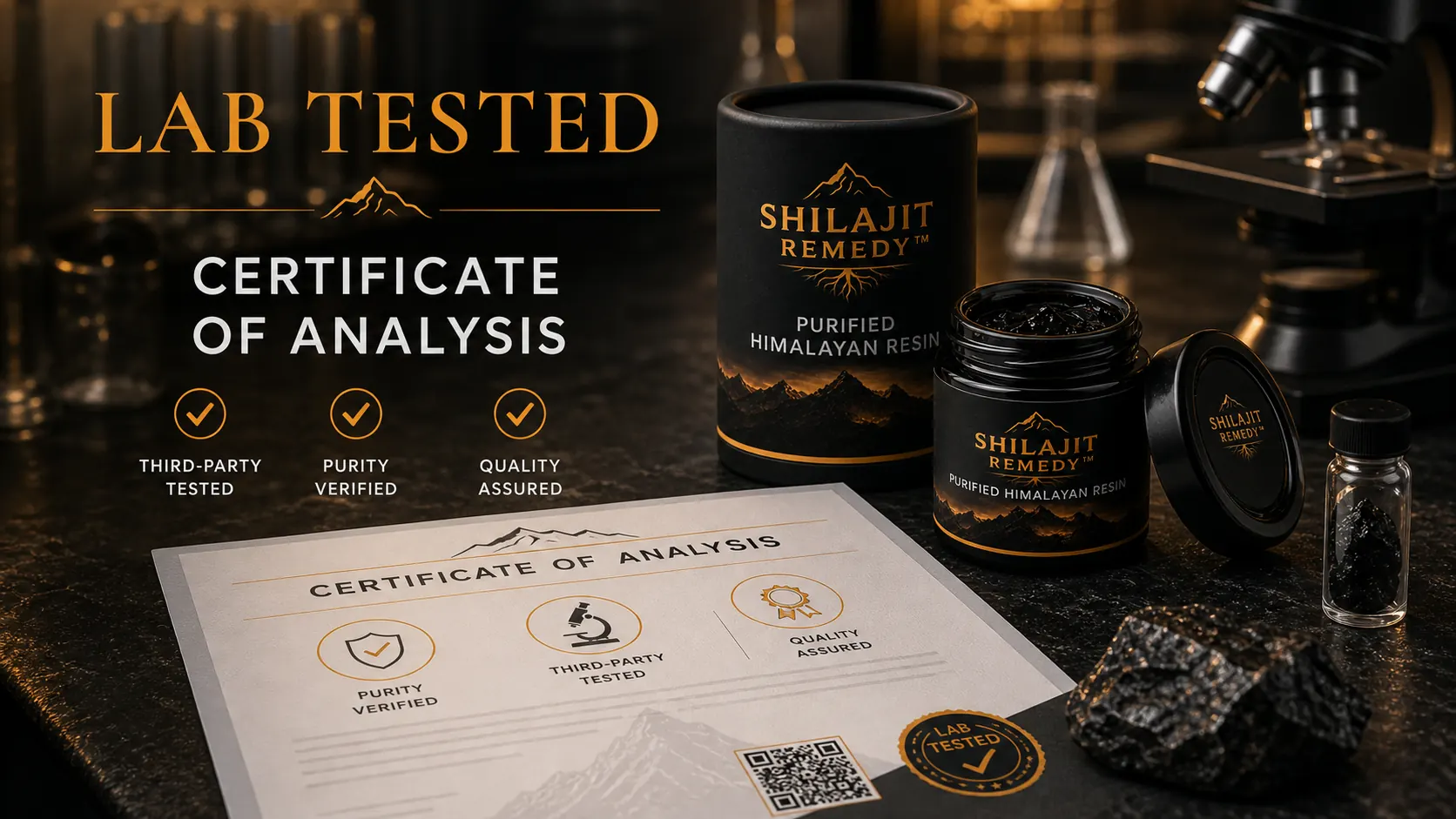
Shilajit forms inside rock, so testing is not optional. Here is what we test for, why it matters, and how to read a certificate of analysis (COA).

What we test

Every batch, independently screened.

Batches are tested by a third-party, ISO/IEC 17025 accredited laboratory and manufactured in a GMP-compliant facility. Reports are matched to the batch number printed on your jar.

Heavy metals

Lead, arsenic, cadmium and mercury — the most important safety screen for any mineral resin.

Microbiology

Total aerobic count, yeast & mold, and pathogens such as E. coli and Salmonella.

Identity & composition

Confirms the material is shilajit and characterises fulvic acid content.

Physical characteristics

Appearance, moisture and solubility consistent with purified resin.

Batch reports

Published certificates

Batch SR-202509-01

Harken Research, Pasadena, CA · Tested October 14, 2025

Third-party certificate

Heavy metals (ICP-MS), residual solvents (headspace GC-MS) and water activity for sample 26DL14131-A, purified shilajit resin from Nepal. Certificate issued October 15, 2025. The certificate reports figures per 30 g; the per-serving amounts below are calculated for one 200 mg daily serving.

  • Lead (Pb)

    Pass

    5.10 µg/g · ≈ 1.0 µg per serving

    Limit: ≤ 5 µg/day (USP <2232>)

  • Arsenic (As, total)

    Pass

    7.34 µg/g · ≈ 1.5 µg per serving

    Limit: ≤ 15 µg/day (USP <2232>)

  • Cadmium (Cd)

    Not detected

    Below detection (< 0.106 µg/g)

    Limit: ≤ 5 µg/day (USP <2232>)

  • Mercury (Hg)

    Not detected

    Below detection (< 0.025 µg/g)

    Limit: ≤ 2 µg/day (USP <2232>)

  • Residual solvents (20 tested)

    Pass

    Acetone 23.6 µg/mL; 19 others below detection

    Limit: Acetone ≤ 5,000 ppm (USP <467>)

  • Water activity

    Reported

    0.807 aw

Certificate of analysis for batch SR-202509-01, page 1 of 2
Page 1 of 2
Certificate of analysis for batch SR-202509-01, page 2 of 2
Page 2 of 2

Shown for viewing only. Need a copy for your records? Request it from our team.
Buyer education

How to read a shilajit COA

  1. Check the batch number matches the jar you are holding. A generic, undated report is a red flag.
  2. Check who did the testing. Look for an independent lab, ideally ISO/IEC 17025 accredited — not the seller's own facility.
  3. Look at heavy metals. Results for lead, arsenic, cadmium and mercury should be listed with units (ppm or µg/g) and be below the stated limits.
  4. Look at microbiology. Total aerobic count, yeast and mold should be within limits, and pathogens should be “absent” or “not detected”.
  5. Check the date. Reports should be recent and relevant to the batch currently being sold.

Shilajit is a natural material, so color, texture and mineral content can vary slightly between batches. That is normal — and exactly why every batch has its own certificate.

Want to go deeper? Read why lab testing matters for shilajit.

Begin your ritual

Pure Himalayan resin. Proof included.

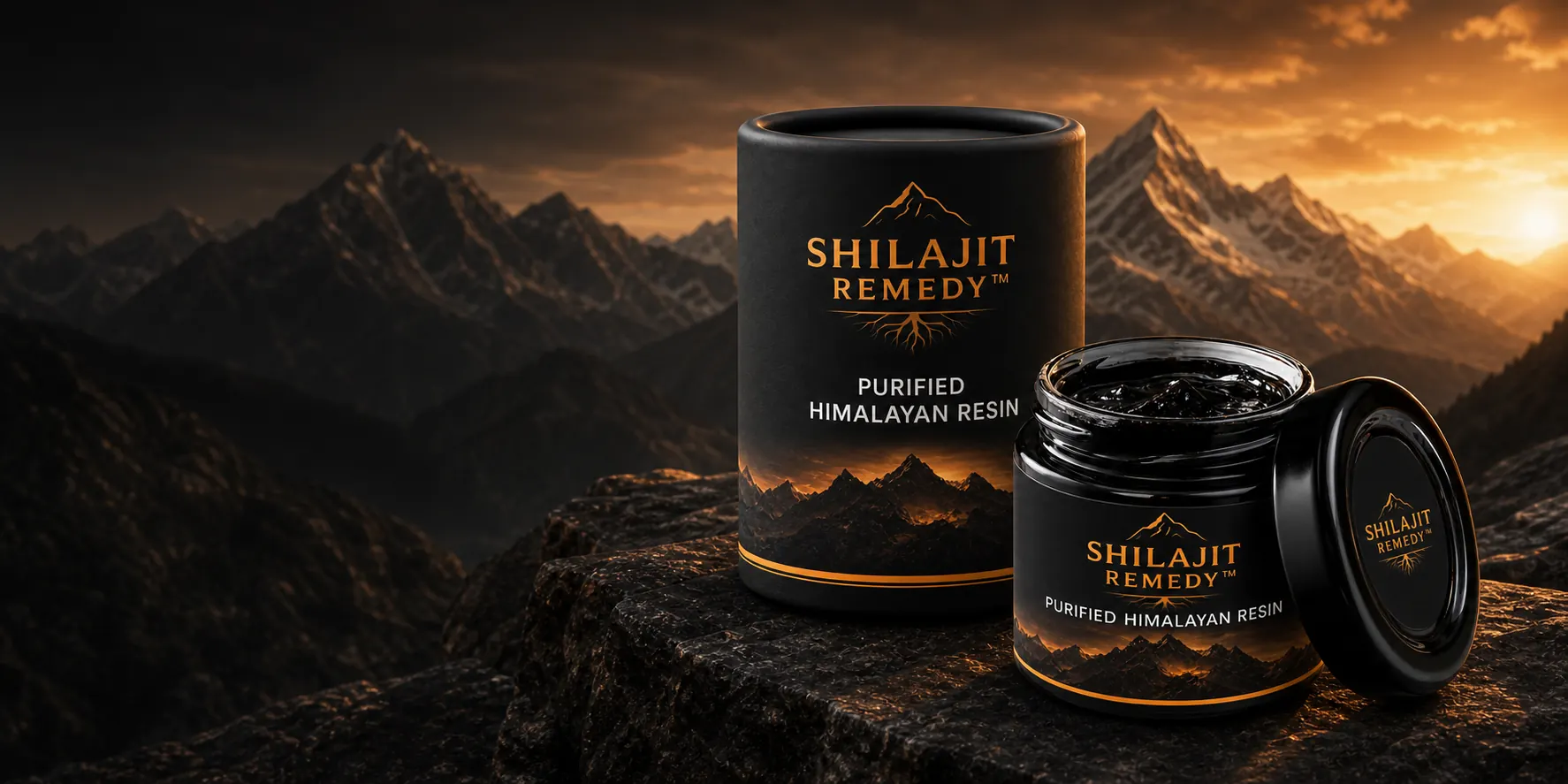
One 30g jar, around 150 daily servings, lab-tested and shipped free across the USA.

✦