Basics
What Is Shilajit? Origins, Composition and Traditional Use
A clear introduction to shilajit: where it comes from, what it contains, how it has been used in Ayurveda and what modern research says.
SR By Shilajit Remedy Team · · 2 min read
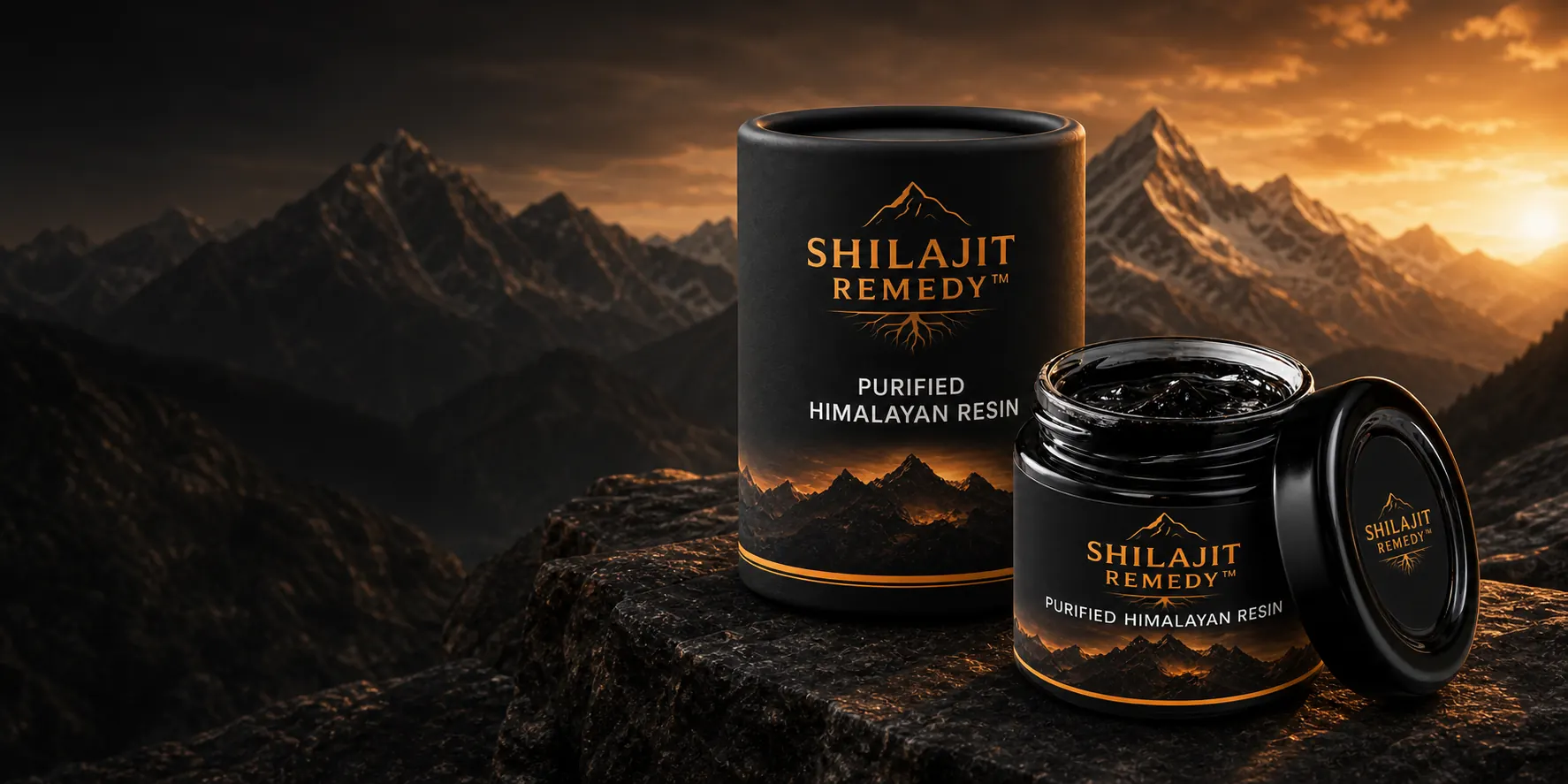
If you've started researching natural wellness, you've probably come across shilajit — a glossy black resin with a history stretching back thousands of years. Here's what it actually is, where it comes from, and what to know before you try it.
Shilajit in one sentence
Shilajit is a mineral-rich, tar-like resin that slowly seeps from high-altitude rock in mountain ranges such as the Himalayas, formed over centuries from decomposed plant matter compressed between layers of stone.
Where shilajit comes from
The best-known sources are the Himalayan regions of Nepal, India and Tibet, along with the Altai and Caucasus mountains. During warm months, the rock heats up and the resin oozes out of cracks and crevices. Collectors gather the raw material by hand — often at considerable altitude.
Raw shilajit is not ready to use. It contains rock fragments, sand, plant debris and potentially unwanted elements. Traditionally, it is dissolved in water, filtered and slowly concentrated back into a soft resin. Modern producers follow the same principle with tighter controls and laboratory testing.
What's in it?
- Fulvic acid — the most studied organic component.
- Humic substances — larger organic molecules from decomposed plants.
- Dibenzo-α-pyrones — compounds of interest to researchers studying cellular energy.
- Trace minerals — small amounts of naturally occurring minerals.
Its place in Ayurveda
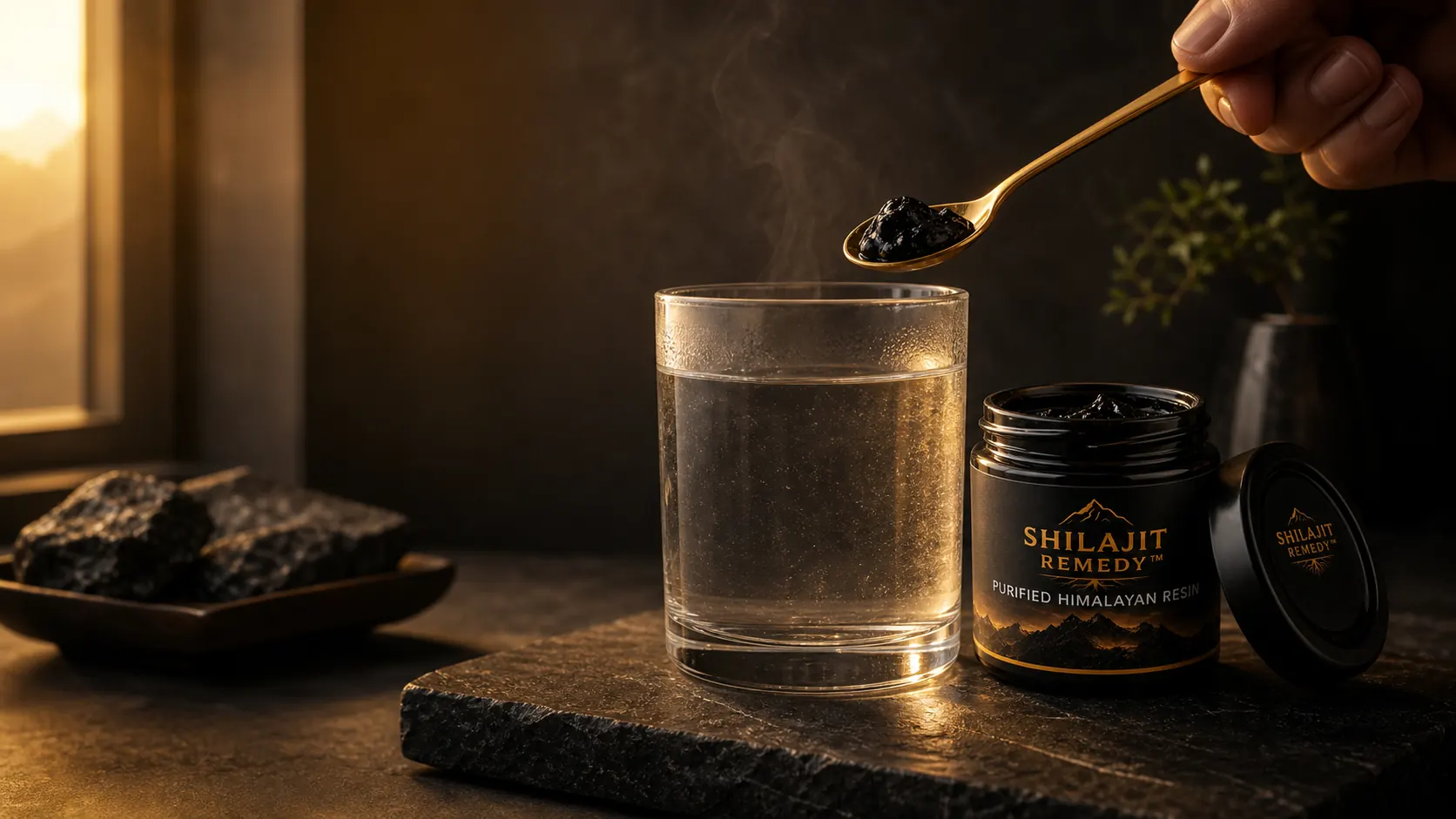
In Ayurveda, shilajit is considered a rasayana — a category of substances traditionally used to support vitality, endurance and healthy aging. Classical texts describe it being taken daily in small amounts, often dissolved in warm milk or water. That traditional serving style is still how most people take resin today.
What modern research says
Scientific interest in shilajit has grown over the past two decades. Small clinical studies with purified shilajit have explored areas like energy, exercise recovery and male wellness, with some promising results. But most studies are small and short-term, so it's best to view shilajit as a traditional wellness supplement rather than a proven treatment for anything.
How to choose quality shilajit
Because purity varies so much, look for purified resin with a named origin, a named manufacturer and a batch-specific certificate of analysis from an independent lab showing heavy metal and microbial results. Read our complete shilajit guide for a full buyer's checklist.
These statements have not been evaluated by the Food and Drug Administration. This product is not intended to diagnose, treat, cure, or prevent any disease. This article is for educational purposes and is not medical advice.