Shilajit is one of the most searched natural wellness products in the USA — and one of the most misunderstood. This guide separates tradition from evidence and marketing from fact, so you can decide whether shilajit belongs in your routine.
What is shilajit?
Shilajit is a sticky, tar-like substance that ranges from dark brown to glossy black. It seeps out of rock crevices in high mountain ranges — most famously the Himalayas — when the rock warms up in summer. In Sanskrit the name is often translated as “conqueror of mountains” or “destroyer of weakness”.
You may also see it spelled silajit, salajeet, shilajeet or shilajat. In Central Asia, a related material is called mumijo or mumie. They all refer to the same family of mineral-rich mountain resins.
Where shilajit comes from
Shilajit is thought to form over very long periods as plant material — mosses, lichens and other vegetation — is gradually decomposed by microbes and compressed between layers of rock. The result is a concentrated organic-mineral complex that slowly exudes from cliffs, typically at altitudes of roughly 3,000–5,000 metres.
Because it emerges from rock, raw shilajit also contains sand, stone fragments, plant debris and potentially unwanted elements. That's why purification — and verification of that purification through testing — is the single most important quality factor.
What's inside shilajit
Shilajit is a complex natural material, and its exact composition varies with the source and the purification method. Researchers most commonly highlight:
- Fulvic acid — a low-molecular-weight humic substance that is the most studied component of shilajit.
- Humic acids — larger organic molecules formed from decomposed plant matter.
- Dibenzo-α-pyrones (DBPs) — organic compounds that have attracted scientific interest in relation to cellular energy.
- Trace minerals — naturally occurring minerals such as iron, magnesium, calcium, potassium and zinc, in small amounts.
Be cautious of claims like “85+ minerals in therapeutic doses”. Shilajit contains trace minerals, but a 200 mg serving is not a meaningful source of daily mineral requirements. Its interest lies in its organic compounds, not as a multivitamin.
Traditional use & what research says
In Ayurveda, India's traditional system of medicine, shilajit is classed as a rasayana — a substance traditionally used to support vitality, stamina and healthy aging. It has been part of traditional practice for thousands of years across the Himalayan region, from Nepal and India to Tibet and Central Asia.
Modern research on shilajit is growing but still limited. A handful of small human studies, mostly using standardised purified shilajit, have looked at areas such as energy and fatigue, exercise recovery and male wellness, with some encouraging early results. However, the studies are generally small and short, and more rigorous research is needed before firm conclusions can be drawn.
That's why we describe shilajit in terms of traditional use and daily wellness routines rather than medical outcomes. Shilajit is a dietary supplement, not a medicine.
Important: These statements have not been evaluated by the Food and Drug Administration. This product is not intended to diagnose, treat, cure, or prevent any disease.
Resin vs powder vs capsules
Shilajit is sold in several formats. Here's how they compare:
| Format | Pros | Watch out for |
|---|---|---|
| Resin | Closest to the traditional form; easiest to verify by look, feel and solubility; no added ingredients. | Needs a spoon and warm water; sticky texture. |
| Powder | Easy to measure. | Often dried at high heat or blended with carriers; harder to verify authenticity. |
| Capsules / tablets | Convenient and tasteless. | May include fillers and flow agents; actual shilajit content can be low. |
| Gummies / drops | Pleasant to take. | Usually contain sugars, flavours and a small amount of shilajit extract. |
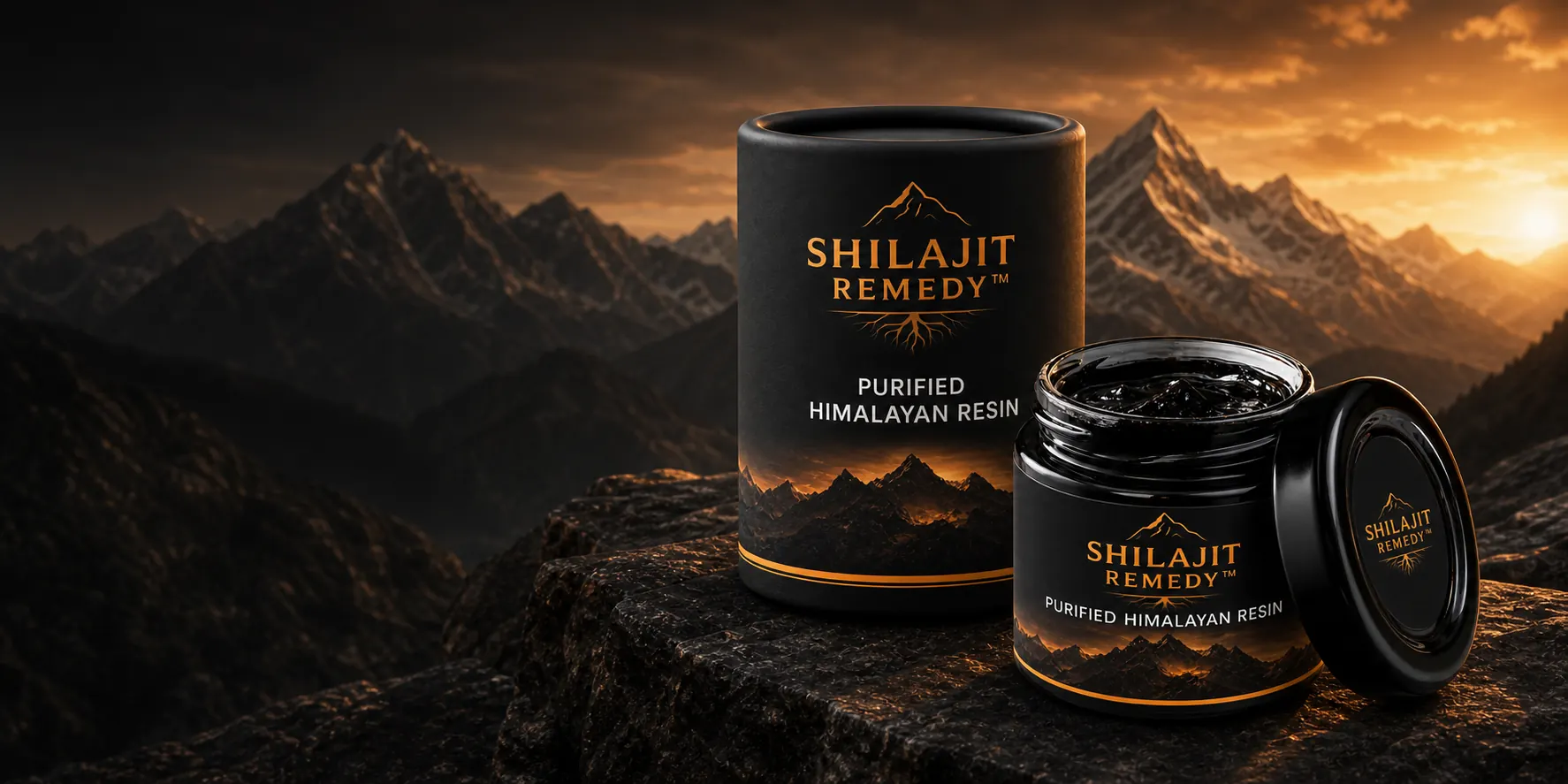
We chose purified resin for Shilajit Remedy because it is the most transparent format: one ingredient, nothing to hide.
How to take shilajit
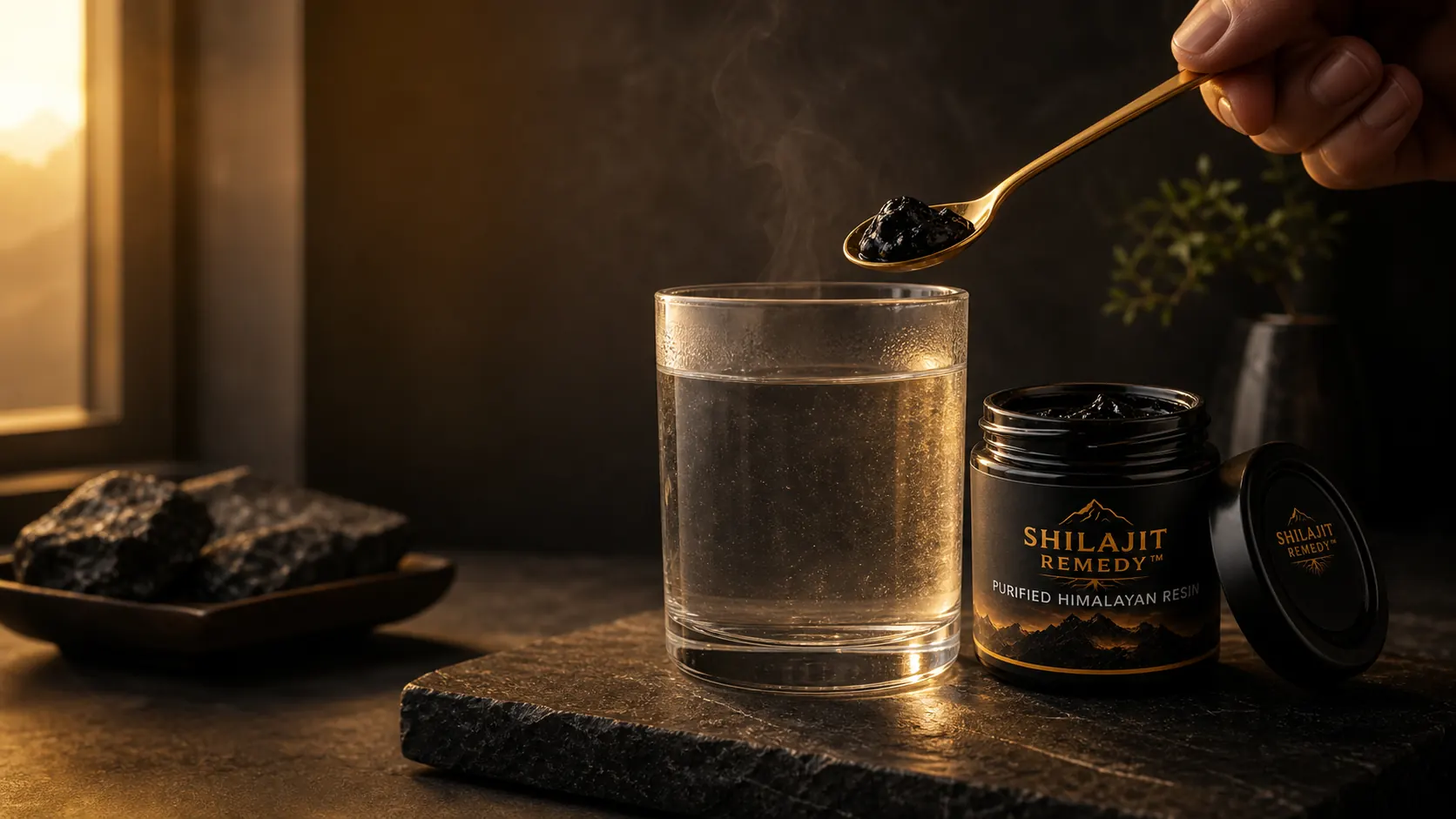
- Measure a pea-sized portion — approximately 200 mg — using the included spoon.
- Dissolve it in a cup of warm (not boiling) water, herbal tea or milk. Stir until fully dissolved.
- Drink immediately, once daily.
Best time of day: many people prefer the morning, with or before breakfast, as part of a steady start to the day. Consistency matters more than timing.
Start low: if you're new to shilajit, consider starting with half a serving for the first week and see how you feel. Do not exceed the suggested serving unless advised by a healthcare professional.
Read our full guide: How to take shilajit resin — dosage, timing and tips.
How to spot real shilajit
Because shilajit is valuable, adulterated and fake products are common. Home tests can provide helpful clues — but only a lab report can confirm purity and safety.
- Temperature test: genuine resin becomes hard and brittle when cold and soft and pliable when warm.
- Solubility test: real resin dissolves fully in warm water, leaving a golden-brown to dark liquid with little or no residue.
- Alcohol test: pure shilajit does not dissolve well in alcohol.
- Smell: expect an earthy, smoky, slightly bitter aroma — not sweet or chemical.
- Paperwork: a named origin, a named manufacturer and a batch-specific certificate of analysis.
Learn more in How to tell if shilajit is real: 6 practical checks.
Safety & who should avoid shilajit
Purified, tested shilajit is generally well tolerated when used as directed. However, it is not appropriate for everyone:
- Not intended for anyone under 18.
- Do not use if pregnant or nursing.
- Speak with a healthcare professional first if you take any medication or have a medical condition — especially high blood pressure, iron overload (hemochromatosis), gout or a heart condition.
- Stop using it if you notice any adverse reaction.
Never use raw or unprocessed shilajit. Unpurified material can contain heavy metals, free radicals and microbial contamination. This is why we only sell purified resin with third-party lab testing.
Storage & shelf life
- Store the jar tightly closed in a cool, dry place away from direct sunlight.
- Use a clean, dry spoon every time — moisture can affect texture.
- If the resin hardens in cold weather, warm the closed jar in your hands for a minute. If it gets very soft in summer, place it in the fridge briefly.
- Check the best-before date printed on the jar.
Buying shilajit in the USA: a checklist
If you are searching for shilajit in the USA, silajit or pure Himalayan shilajit resin, the important question is not only where it comes from — it's whether the brand can prove what's in the jar. Before you buy, check that the seller:
- Sells purified resin, not a filler-heavy blend.
- Names the origin and the manufacturer.
- Provides a batch-specific certificate of analysis from an independent lab.
- Shows supplement facts, serving size and warnings before checkout.
- Lists real contact details, privacy, terms and return information.
Shilajit Remedy was built to meet every point on this list. See our purified Himalayan resin →