Buying guide
Shilajit Resin vs Capsules vs Powder: Which Should You Choose?
An honest comparison of shilajit formats — resin, powder, capsules and gummies — on purity, convenience and how easy they are to verify.
SR By Shilajit Remedy Team · · 1 min read
Shilajit comes in resin, powder, capsules, gummies and drops. Each format has trade-offs in purity, convenience and how easy it is to verify. Here's an honest comparison.
Resin
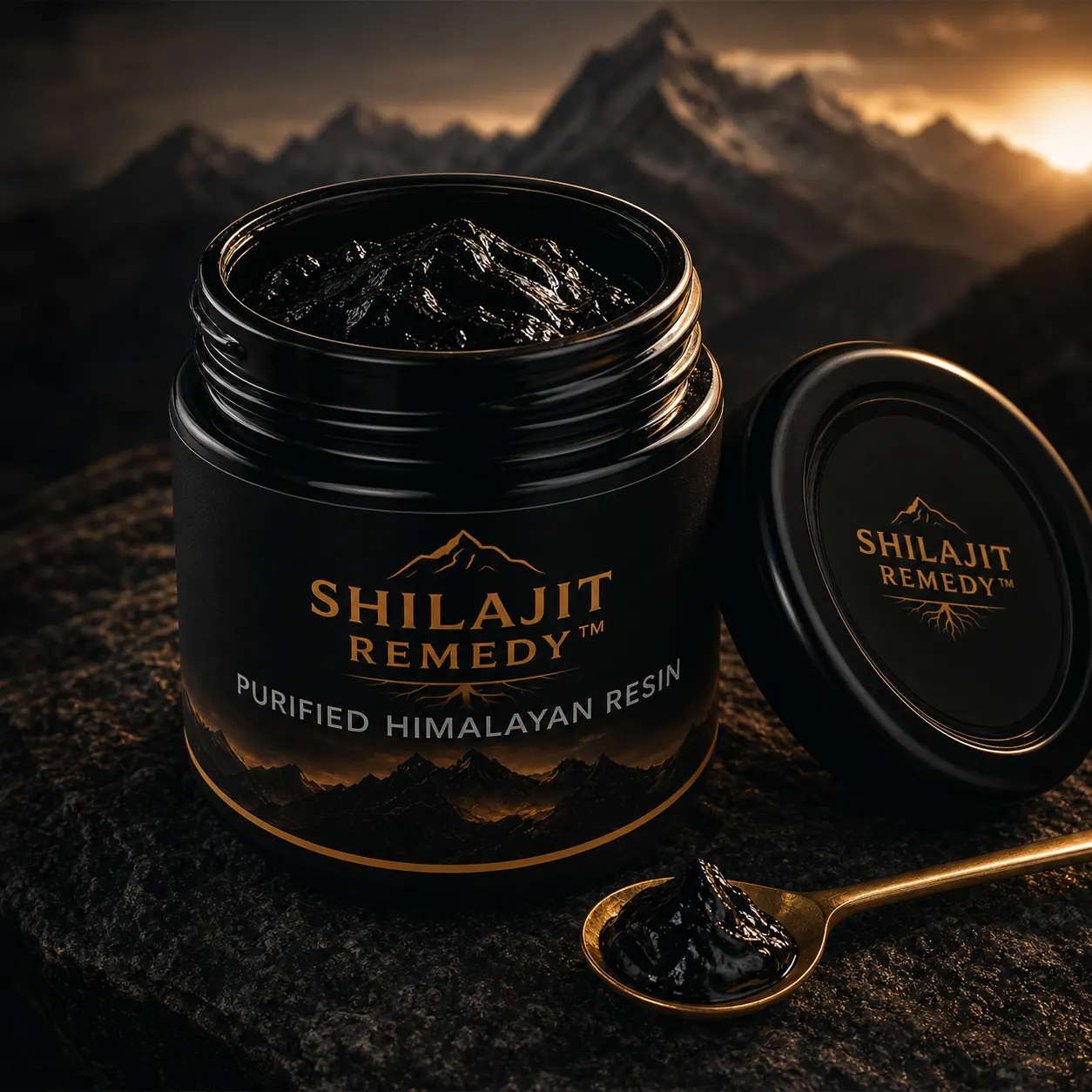
Resin is the closest to shilajit's traditional form. It's dissolved in warm water or milk and taken daily.
- Pros: minimal processing after purification; usually no added ingredients; easiest to check at home (temperature and solubility tests).
- Cons: sticky; needs a spoon and a drink; earthy taste.
Powder
- Pros: easy to measure and mix.
- Cons: drying often involves higher heat; may be blended with carriers to stop clumping; much harder to verify authenticity at home.
Capsules and tablets
- Pros: convenient, portable, no taste.
- Cons: often contain fillers, flow agents and capsule materials; the actual shilajit content per capsule can be low; impossible to check by eye.
Gummies and drops
- Pros: pleasant to take.
- Cons: usually include sugars, flavours and gelling agents with a small amount of extract; less “shilajit” per serving.
At a glance
| Format | Purity potential | Easy to verify? | Convenience |
|---|---|---|---|
| Resin | High | Yes | Medium |
| Powder | Medium | No | High |
| Capsules | Medium–Low | No | Very high |
| Gummies / drops | Low | No | Very high |
Our view
Whichever format you choose, the deciding factor should be transparency: a named source, an ingredient list you understand and a batch-specific lab report. We chose purified resin for Shilajit Remedy because it's the format with the least to hide.
These statements have not been evaluated by the Food and Drug Administration. This product is not intended to diagnose, treat, cure, or prevent any disease. This article is for educational purposes and is not medical advice.